Bangalore / Kannada / Pooja Services /
Mangala Gowri Vratha PoojaMangala Gowri Vratha Pooja
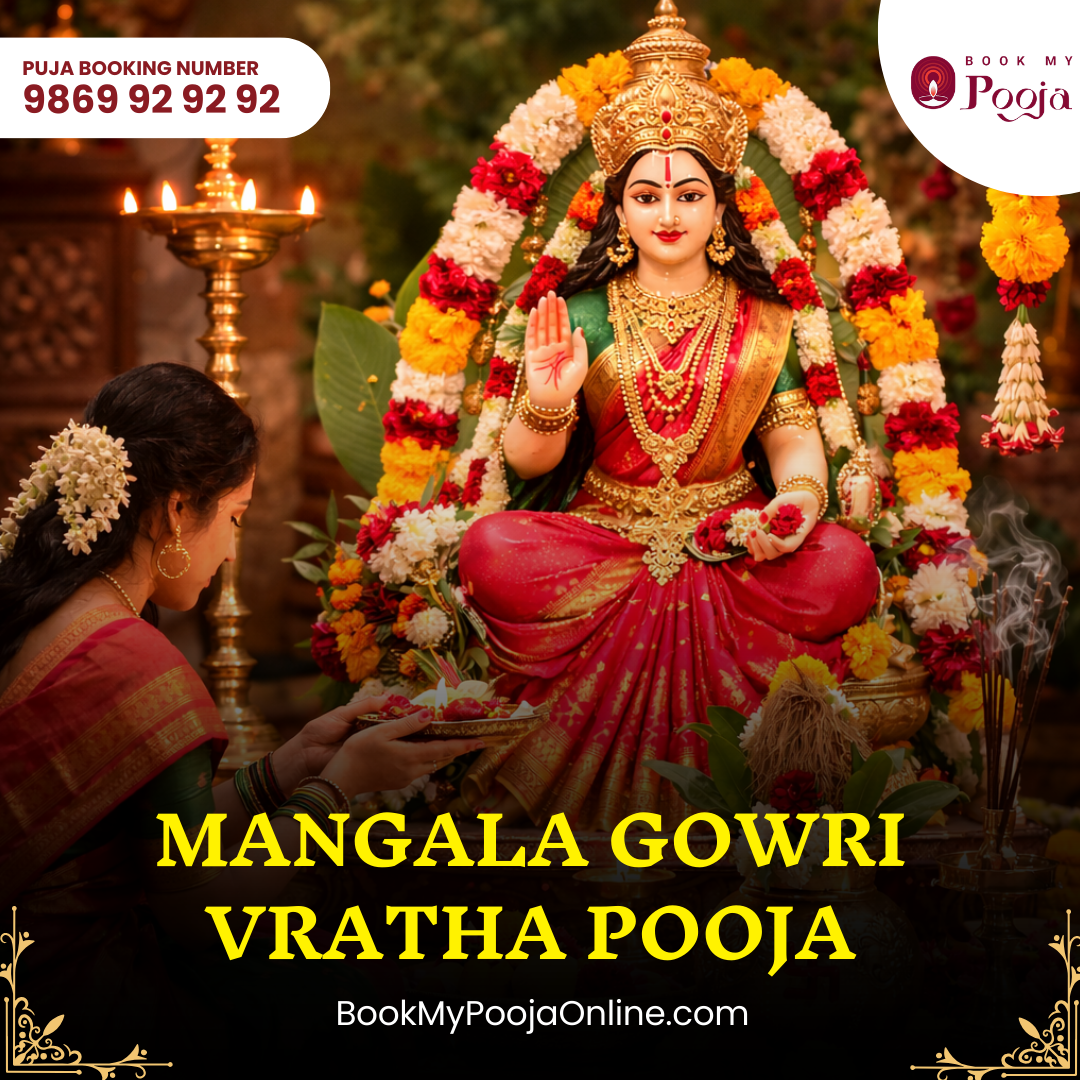
Mangala Gowri Vratha Pooja is dedicated to Goddess Parvathi, also known as Mangala Gowri, and is primarily observed by married women for the well-being, health, and longevity of their husbands. Unmarried women also perform this vratha to seek a good husband and a happy married life. This pooja is an expression of devotion and gratitude towards the divine mother, who bestows protection, prosperity, and harmony in married life.
Pooja Packages


Pandit ji dakshina

All Puja Items
Pandit Ji Travel Charges
Number Of Days
Number Of Pandits

Looking for a custom package? Click here to tailor your perfect pooja experience!
Our Promise

Experienced Pandits

Vedic Standards & Procedures

100% Puja Benefits

High Quality Samgri

Professional Guidance and Support
Guaranteed Punctuality
Significance of Mangala Gowri Vratha Pooja
- For Married Women: Performing this pooja ensures the long life, health, and well-being of the husband and brings peace and prosperity to the family.
- For Unmarried Women: It helps in getting a good life partner, who will support them in all aspects of life.
- Symbol of Marital Commitment: This pooja strengthens the bond between husband and wife, ensuring happiness and longevity in their relationship.
When to Perform Mangala Gowri Vratha Pooja?
- This pooja is performed on Tuesdays in the month of Shravan (Shravana Maasa).
- Newly married women should observe this pooja for five consecutive years for maximum benefits.
Rituals of Mangala Gowri Vratha Pooja
-
Setting Up the Pooja
- The pooja area is cleaned, and a mandala (sacred diagram) is drawn using rice flour or rangoli.
- The idol or image of Mangala Gowri (Goddess Parvathi) is placed on a pedestal and decorated with flowers.
-
Invocation of the Goddess
- The priest or the devotee invokes Goddess Parvathi by chanting Vedic mantras.
- Offerings such as kumkum, turmeric, flowers, fruits, and prasadam are made to the deity.
-
Kumkum Archana and Thamboolam Offering
- Married women invite a minimum of five women to the pooja and offer them Kumkum, betel leaves, areca nuts, bangles, and fruits as a sign of blessings and good fortune.
-
Mangala Gowri Vratha Katha (Sacred Story Recitation)
- Devotees read or listen to the Mangala Gowri Vratha Katha, which narrates the significance of this pooja and how it brings prosperity and happiness to families.
-
Pooja Conclusion and Prasadam Distribution
- After completing the pooja, prasadam such as kosambari (salad), payasam (kheer), and other traditional sweets is distributed among family and guests.
Benefits of Performing Mangala Gowri Vratha Pooja
- Ensures the long life and well-being of the husband.
- Brings happiness, peace, and prosperity to the family.
- Blesses unmarried women with a suitable and ideal husband.
- Removes obstacles in marriage and ensures a harmonious relationship.
- Brings the divine grace of Goddess Parvathi into the household.
More Information
- Performed for the well-being of a life partner.
- Helps in fulfilling all desires and seeking divine blessings.
- Observed on Shravan Tuesdays.
- Main deity: Goddess Mangala Gowri (Parvathi Devi).
Book a Pandit for Mangala Gowri Vratha Pooja
Setting Up the Pooja
- The pooja area is cleaned, and a mandala (sacred diagram) is drawn using rice flour or rangoli.
- The idol or image of Mangala Gowri (Goddess Parvathi) is placed on a pedestal and decorated with flowers.
Invocation of the Goddess
- The priest or the devotee invokes Goddess Parvathi by chanting Vedic mantras.
- Offerings such as kumkum, turmeric, flowers, fruits, and prasadam are made to the deity.
Kumkum Archana and Thamboolam Offering
- Married women invite a minimum of five women to the pooja and offer them Kumkum, betel leaves, areca nuts, bangles, and fruits as a sign of blessings and good fortune.
Mangala Gowri Vratha Katha (Sacred Story Recitation)
- Devotees read or listen to the Mangala Gowri Vratha Katha, which narrates the significance of this pooja and how it brings prosperity and happiness to families.
Pooja Conclusion and Prasadam Distribution
- After completing the pooja, prasadam such as kosambari (salad), payasam (kheer), and other traditional sweets is distributed among family and guests.
Perform this sacred pooja in the most authentic way with the guidance of experienced Kannada-speaking Vedic pandits. Choose from convenient packages as per your budget and get all the pooja samagri arranged. All pandits are well-trained from Vedic Pathshalas and will ensure that the pooja is conducted as per Kannada cultural traditions.