
Bangalore / Marathi / Pooja Services /
Antim Sanskar Last RitesAntim Sanskar Last Rites
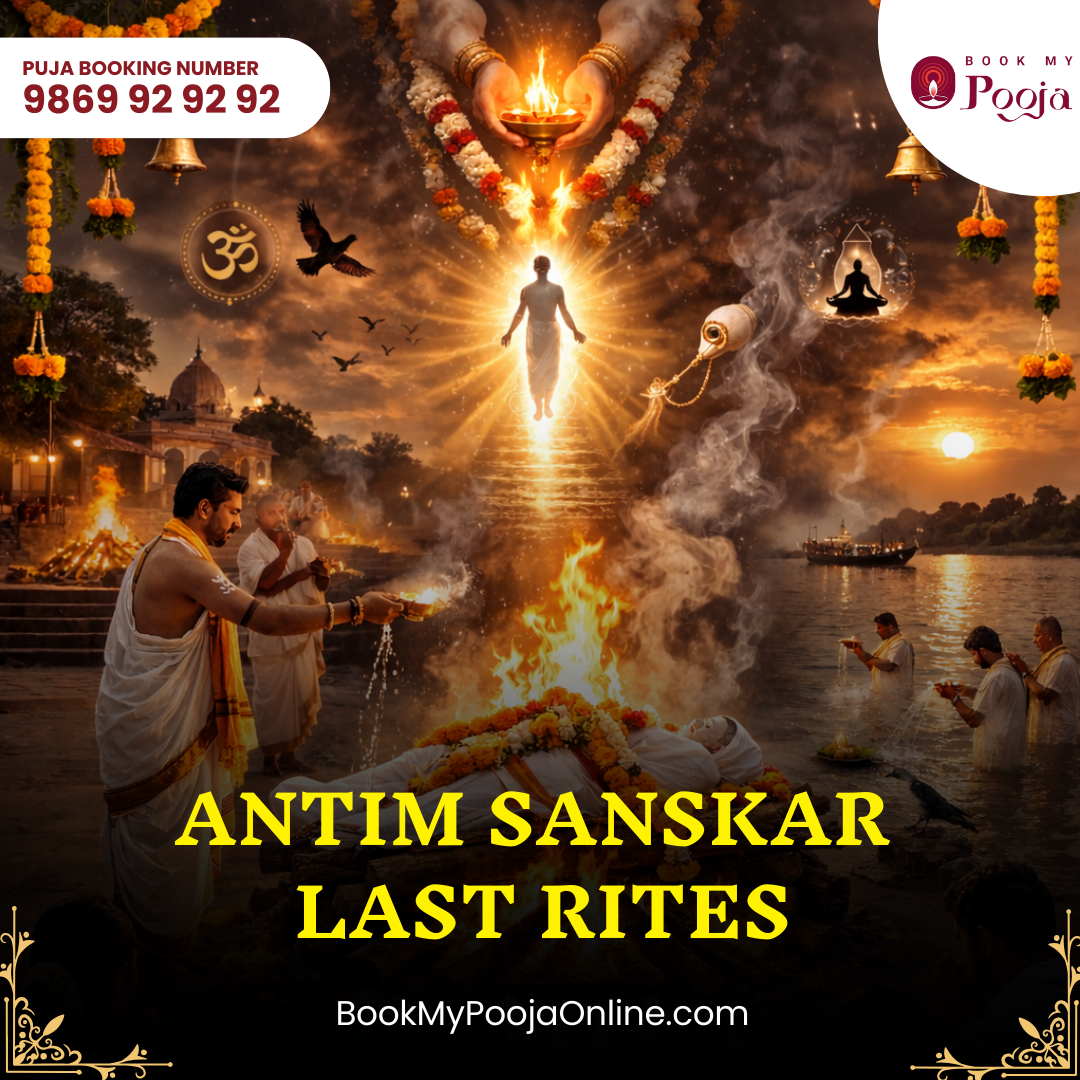
Antim Sanskar is the final rite performed after a person passes away to help their soul attain peace and transition smoothly to the Pitrulok (realm of ancestors). According to Hindu traditions, there are 16 Samskaras, and Antim Sanskar is the last and most crucial one. Performing this ritual with proper Vedic procedures ensures that the soul is liberated and blesses the family members with peace and prosperity.
Looking for a custom package? Click here to tailor your perfect pooja experience!
Our Promise

Experienced Pandits

Vedic Standards & Procedures

100% Puja Benefits

High Quality Samgri

Professional Guidance and Support
Guaranteed Punctuality
Significance of Antim Sanskar
- It is believed that after death, the Atma (soul) begins its journey toward Moksha or Pitrulok.
- Proper last rites as per the Shastras and Vedic traditions help in dissolving the attachments of the departed soul with the material world.
- Ensuring these rituals are performed correctly prevents unfulfilled desires and disturbances in the afterlife of the deceased.
Procedure of Antim Sanskar
- Preparation and Apara Kriya:
- As soon as a person passes away, a Pandit who specializes in Apara Kriya (rituals for the deceased) conducts initial rites at home.
- Cremation Process:
- The body is taken to the cremation ground where final rituals, including Havan, Mantras, and Daan, are performed.
- The body is then cremated either on a wooden pyre or in an electric crematorium as per family preference.
- Post-Cremation Rituals (Shradh and Pind Daan):
- From the 1st day to the 13th day, various Shradh Karyas are conducted.
- Pind Daan is performed to offer food and water to the departed soul, ensuring a smooth transition to the afterlife.
- Asthi Visarjan (Immersion of Ashes):
- The ashes (Asthi) are collected and immersed in a sacred river like Ganga, Kaveri, Yamuna, or Godavari, as per Hindu customs.
- Tarpan and Pind Daan:
- On the 10th or 11th day, Tarpan and Pind Daan are performed to seek blessings from ancestors and help the soul attain peace.
- 13th Day Ritual (Tehravi):
- This marks the completion of Antim Sanskar and a feast (Brahmin Bhojan) is organized for Brahmins and the needy, seeking their blessings for the deceased's soul.
More Information
- Antim Sanskar is performed for the peace and salvation of the soul.
- From the 1st day to the 13th day, all the necessary rituals are conducted.
- The ceremony is performed at home, in a designated place, or in a Sabha.
- The blessings of ancestors ensure prosperity and harmony in the family.
Book Pandit for Antim Sanskar
- As soon as a person passes away, a Pandit who specializes in Apara Kriya (rituals for the deceased) conducts initial rites at home.
- The body is taken to the cremation ground where final rituals, including Havan, Mantras, and Daan, are performed.
- The body is then cremated either on a wooden pyre or in an electric crematorium as per family preference.
- From the 1st day to the 13th day, various Shradh Karyas are conducted.
- Pind Daan is performed to offer food and water to the departed soul, ensuring a smooth transition to the afterlife.
- The ashes (Asthi) are collected and immersed in a sacred river like Ganga, Kaveri, Yamuna, or Godavari, as per Hindu customs.
- On the 10th or 11th day, Tarpan and Pind Daan are performed to seek blessings from ancestors and help the soul attain peace.
- This marks the completion of Antim Sanskar and a feast (Brahmin Bhojan) is organized for Brahmins and the needy, seeking their blessings for the deceased's soul.
To perform Antim Sanskar as per Vedic traditions, it is crucial to have an experienced Pandit guide the family through all the required rituals. Book a Pandit for a smooth and authentic performance of last rites, ensuring peace and liberation for the departed soul.